
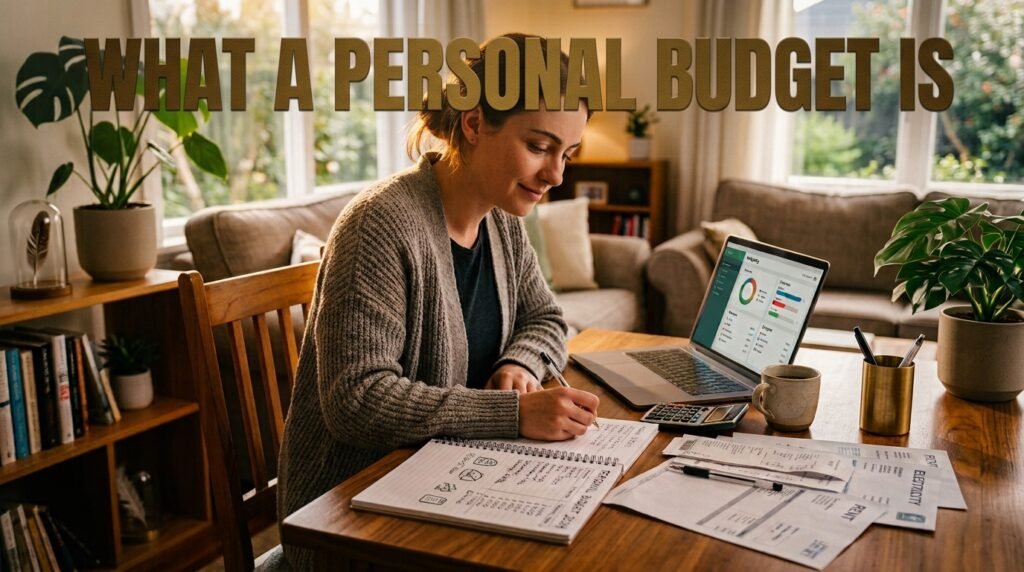
A Complete Guide to Managing Your Money
A personal budget is a simple financial plan that helps you understand how much money you earn, how much you spend, and how much you can save or invest. In everyday life, it is easy to spend money without realizing where it goes. Small purchases such as coffee, restaurant meals, online shopping, subscriptions, transportation, and entertainment can gradually add up and make it difficult to reach important financial goals. A personal budget gives you a clear picture of your financial situation and allows you to make intentional decisions about your money. Whether you are a student, young professional, parent, business owner, or retiree, having a personal budget can help you control your spending, reduce financial stress, build savings, and work toward long-term financial security.
At its simplest, a personal budget compares your income with your expenses. Your income may come from a salary, hourly wages, freelance work, a side business, investment income, or other reliable sources. Your expenses include everything you pay for during a particular period, such as rent or mortgage payments, groceries, utilities, insurance, transportation, debt payments, entertainment, and personal purchases. After identifying these numbers, you can determine whether you are spending less than you earn, spending approximately what you earn, or spending more than you earn. This basic calculation is extremely important because consistently spending more money than you receive can eventually lead to credit card debt, loans, missed payments, and financial pressure. A budget helps you recognize these problems before they become more serious.
One of the biggest benefits of creating a personal budget is that it gives your money a purpose. Instead of simply receiving a paycheck and spending it until the next payday, you can decide in advance where your money should go. For example, you might decide that a certain amount will be used for housing, another amount for groceries, another amount for transportation, and a specific amount for savings. You can also set aside money for entertainment and personal spending so that your budget does not feel unnecessarily restrictive. The goal of budgeting is not to prevent you from enjoying your money. Instead, the goal is to make sure that your spending reflects your priorities and that you are not sacrificing important financial goals for unnecessary purchases.
Personal budgets usually include both fixed and variable expenses. Fixed expenses are costs that generally remain the same from month to month. Rent, mortgage payments, certain insurance premiums, and some subscription services are common examples. Variable expenses can change depending on your lifestyle and circumstances. Groceries, electricity bills, transportation costs, dining out, entertainment, and clothing purchases may vary each month. Understanding the difference between these types of expenses makes budgeting easier because fixed expenses are often predictable, while variable expenses may require more attention and adjustment.
Another important part of a personal budget is distinguishing between needs and wants. Needs are expenses that are necessary for basic living and financial responsibilities. Housing, food, utilities, basic transportation, healthcare, insurance, and required debt payments are generally considered needs. Wants are things that can make life more enjoyable but are not essential, such as expensive restaurants, new electronics, luxury clothing, streaming services, vacations, and entertainment. This does not mean that wants are bad. Spending money on things you enjoy is perfectly reasonable when it fits within your financial situation. The problem occurs when wants consistently consume money that should be used for necessities, savings, or debt repayment.
Creating a personal budget begins with calculating your total monthly income. If you receive a regular salary, this process is relatively simple. However, people with irregular income, such as freelancers or contractors, may need to estimate their average monthly earnings based on previous months. It is usually better to create a conservative estimate rather than assuming you will always earn your highest possible amount. Once you know your income, make a complete list of your monthly expenses. Reviewing bank statements and credit card statements can be extremely helpful because people often forget about small recurring expenses when creating a budget from memory.
After listing your expenses, organize them into categories. Common categories include housing, utilities, groceries, transportation, insurance, healthcare, debt payments, savings, entertainment, personal spending, and miscellaneous expenses. Categorization makes it easier to identify areas where you may be spending too much. For example, you may discover that your grocery spending is reasonable but that frequent restaurant meals are taking a large portion of your income. You may also find that several small subscriptions are costing more than you realized. Once these patterns become visible, you can make informed decisions instead of guessing where your money is going.
A personal budget should also include savings as a planned expense. Many people make the mistake of saving whatever money happens to be left at the end of the month. Unfortunately, there may not be anything left after all expenses are paid. A better approach is to treat savings as an important part of your budget from the beginning. You can decide how much you want to save each month and move that amount into a savings account soon after receiving your income. Even a small amount can make a difference when it is saved consistently. Over time, regular contributions can help you build an emergency fund, save for major purchases, prepare for retirement, or achieve other financial goals.
An emergency fund is one of the most useful goals to include in a personal budget. Unexpected expenses can happen at any time. A vehicle may need repairs, a major household appliance may stop working, or an unexpected bill may arrive. Without savings, people may have to rely on credit cards or high-interest loans to cover these expenses. An emergency fund provides a financial cushion that can reduce the need to borrow money when something unexpected happens. The amount you need depends on your personal circumstances, income stability, expenses, and responsibilities, but building the fund gradually is more important than waiting until you can save a large amount at once.
Budgeting can also play an important role in paying off debt. If you have credit card balances, personal loans, student loans, or other debt, your budget can show exactly how much money is available for additional payments after essential expenses are covered. Paying more than the minimum required amount, when financially possible, can help reduce debt faster and potentially lower the total amount of interest you pay. A budget also helps prevent the cycle of paying off debt and then immediately creating new debt because you can identify how much discretionary spending is actually affordable.
There are many different budgeting methods, and there is no single approach that works for everyone. One popular method is the 50/30/20 budgeting rule. Under this approach, approximately 50% of after-tax income is allocated toward needs, 30% toward wants, and 20% toward savings and debt repayment. These percentages are not strict requirements, and many people will need to adjust them based on housing costs, income, family size, location, and financial goals. Someone living in an expensive city may need to spend more than 50% on necessities, while another person with fewer expenses may be able to save more than 20%. The value of the method is that it provides a simple starting framework.
Another approach is zero-based budgeting. With this method, every dollar of income is assigned a purpose before the month begins. The goal is for income minus planned expenses, savings, and debt payments to equal zero. This does not mean that you spend every dollar unnecessarily. Money assigned to savings or investments is also considered part of the plan. Zero-based budgeting can be useful for people who want detailed control over their finances because it requires them to think carefully about where each dollar should go.
Some people prefer a simpler budgeting system in which they focus on a few major categories rather than tracking every individual purchase. This can work well for people who have predictable incomes and expenses. Others prefer detailed tracking because they want to understand exactly where their money is going. The best budget is the one you can realistically maintain. A complicated system that you stop using after two weeks is less useful than a simple system that you follow consistently for years.
Technology has made personal budgeting easier than ever. You can use a spreadsheet, budgeting application, banking tools, or even a simple notebook to track your income and expenses. The specific tool is less important than developing a consistent habit of reviewing your finances. Many financial institutions also provide spending summaries that categorize transactions automatically. However, automatic categorization is not always perfect, so it is still important to review your transactions and make sure they are classified correctly.
A successful personal budget should be reviewed regularly. Your financial situation can change because of a new job, a salary increase, a move, marriage, children, new debt, changing insurance costs, or other circumstances. A budget created several years ago may no longer reflect your current life. Reviewing your budget every month gives you an opportunity to compare your planned spending with your actual spending. If you consistently spend more than planned in one category, you can investigate why and adjust your future budget accordingly.
One of the most common budgeting mistakes is making the plan too restrictive. If you remove every enjoyable expense from your budget, you may become frustrated and eventually abandon the system. A realistic budget should leave room for entertainment, hobbies, social activities, and occasional treats when they are affordable. The purpose of budgeting is to create balance. You should be able to enjoy your current life while also preparing for your future. Responsible spending does not mean eliminating everything you enjoy; it means spending intentionally.
Another common mistake is ignoring irregular expenses. Some expenses do not occur every month, but they still need to be included in your financial planning. Annual insurance payments, holiday spending, vehicle maintenance, school expenses, property taxes, birthdays, and vacations can create financial stress if you do not prepare for them. One solution is to estimate these expenses and divide the annual amount by twelve. You can then set aside a small amount every month so that the money is available when the expense arrives.
Personal budgeting can also help you make better long-term decisions. When you know your income, expenses, savings rate, and debt obligations, it becomes easier to evaluate major financial choices. You can determine whether you can realistically afford a new car, move to a more expensive home, take a vacation, or make a large purchase. Instead of relying on emotion or assumptions, you can make decisions based on actual numbers. This can protect you from taking on financial commitments that are difficult to maintain.
A personal budget is also closely connected to financial goals. Your goals might include building an emergency fund, paying off credit cards, buying a home, starting a business, saving for education, investing for retirement, or taking a major vacation. Once you identify your goals, you can include them in your monthly budget. Breaking a large goal into smaller monthly contributions makes it feel more achievable. For example, rather than simply saying that you want to save a large amount of money, determine how much you need to save each month and track your progress.
Perhaps the most important thing to understand about personal budgeting is that it is a habit rather than a one-time task. Creating a budget once does not automatically improve your finances. The real benefits come from reviewing your spending, making adjustments, and following your plan consistently. You will probably make mistakes along the way, and some months may not go according to plan. That is normal. Instead of abandoning your budget after one difficult month, use the experience to understand what happened and make your next plan more realistic.
In conclusion, a personal budget is a practical tool for taking control of your money. It helps you understand your income, organize your expenses, prioritize savings, manage debt, prepare for unexpected costs, and work toward financial goals. You do not need a high income or complicated financial knowledge to create a budget. What matters most is knowing what comes in, understanding what goes out, and making deliberate decisions about the difference. A good personal budget should be realistic, flexible, and aligned with your priorities. When you make budgeting a regular habit, you can reduce financial uncertainty and gain greater confidence in your ability to manage money. Over time, the small decisions you make each month can create a stronger financial foundation and help you move closer to the financial future you want.